Please take a look at my latest article in the Fairfield Daily Republic about the Importance of grandparents in children’s lives. https://www.dailyrepublic.com/lifestyle/religious-view-grandmas-love-influenced-me-in-many-ways/article_96b64d9f-47c9-4a51-85c6-23641463c854.html
Tag Archives: Daniel Molyneux
POLITICIANS ARE POOR SAVIORS
Please take a look at my latest article in the Fairfield Daily Republic. https://www.dailyrepublic.com/lifestyle/religious-view-politicians-are-poor-saviors/article_d5c09a82-5376-11ef-8f5e-0b2adb722cfc.html
WHAT IS JESUS’ GREATEST MIRACLE?
This is the subject of today’s article (June 2, 2024) in the Fairfield Daily Republic. Please take a look. Thanks.
LIFE AFTER DEATH
Please take a look at my latest article on LIFE AFTER DEATH, in the Fairfield Daily Republic.
LIFE AFTER DEATHhttps://www.dailyrepublic.com/lifestyle/religious-view-is-there-life-after-death/article_9ecc9c0a-f387-11ee-b1e5-af662e257673.html

JUDAS SON OF SIMON WINS PRIZE FOR BEST CHRISTIAN FICTION
New Orleans – The Independent Book Publishing Professionals Group (IBPPG) has named the best indie books of 2018. The Next Generation Indie Book Awards are the world’s largest not-for-profit book awards program for independent publishers.
The winners and finalists were honored June 22 at Hotel Monteleone in New Orleans, coinciding with the American Library Association Annual Conference. The awards are judged by leaders of the indie book publishing industry, including many with long careers at major publishing houses. Their love of a great read and experience in the publishing arena identify books deserving a wider audience.
Catherine Goulet, Co-Chair of the 2018 awards proudly said, “Our program has become known as the Sundance of the book publishing world.” Independent book publishing companies are independent of the major conglomerates dominating the book publishing industry. Indies include: small presses, larger independent publishers, university presses, e-book publishers, and self-published authors.
Daniel Molyneux’s historical novel, JUDAS SON OF SIMON (Moriah books) was chosen as the winner of the Christian Fiction category.
It and other works by Molyneux are available from Baker & Taylor, Cokesbury, Amazon, Barnes & Noble, christianbook.com and through your local independent bookseller.
https://www.goodreads.com/author/show/5881738.Daniel_Molyneux

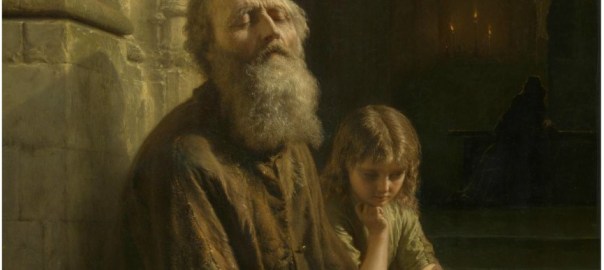
HIDDEN IDENTITY AND XENIA IN JESUS’ HEALING OF BARTIMAEUS by Daniel Molyneux
Introduction
The healing of blind Bar-Timaeus (Βαρ-Τιμαῖος), in Mark 10, may appear to be one of the simplest and least spectacular of Jesus’ miracles, but beneath the surface of this brief periscope is a key reoccurring theme of Jesus’ ministry and Greco-Roman culture. Providing hospitality to travelers/beggars (Xenia – ξενία), and the related concept of gods, angels and/or heroes arriving disguised as travelers or beggars (Theoxenia – θεοξενία), are frequent themes in the Bible (in both the Hebrew and Christian scriptures), as well as in Greco-Roman myth and culture.
Bar-Timaeus may be more than a blind beggar. His “hidden identity” may be that of a Greco-Roman philosopher who has chosen a beggar’s life. And his deepest desire may not be the restoration of physical sight, but obtaining spiritual enlightenment that only Jesus, the Son of David (Υἱὲ Δαυὶδ) can give.
Bar-Timaeus’ healing, in Mark’s gospel, is also a pivotal point for Jesus revealing his “hidden identity,” what some have termed the “messianic secret.” Earlier in his ministry, Jesus instructed those he healed to not “tell this to anyone” (Mark 1:44). When demons begin to announce Jesus’ hidden identity as “Son of God,” Jesus commands them to be silent and “gave them strict orders not to tell others about him” (Mark 3:11-12). Mark 1:34 says, “(Jesus) cast out many demons, but he would not allow the demons to speak because they knew he was the Messiah.” When speaking to the Twelve, Jesus told them, “To you has been given the secret of the kingdom of God. But to those on the outside everything is given in parables” (Mark 4:11). Later, when Jesus asked his closest disciples, “‘Who do you say that I am?’ Peter answered, ‘You are the Messiah.’ Jesus warned them they should tell no one about him” (Mark 8:29-30).
When Jesus encounters Bar-Timaeus, however, Jesus no longer seeks to conceal his “hidden identity.” When Bar-Timaeus calls him “the Son of David,” synonymous with Messiah, Jesus does not command him to be silent; and several hours later, when Jesus nears Jerusalem, he rides into the city in a symbolic manner that proclaims his “hidden identity” to anyone familiar with the scriptural prophesies about the Messiah, the anointed King of Israel.
TO CONTINUE WITH THE ARTICLE, PLEASE GO TO: https://fuller.academia.edu/DanielMolyneux
KIRKUS REVIEW – Judas Son of Simon, by Daniel Molyneux
“The story is most powerful when incorporating details of the time period. Even readers familiar with Judas’ life may not grasp the finer differences among the Sadducees, Pharisees, and Essenes or the threat of revolution apparent at the time. Likewise, information about the intersection of Roman and local powers provides insight into how a figure like Jesus, so seemingly innocuous to the mighty Roman Empire (particularly when compared with the violent Zealots), could be put to death in such a grisly way. Period particulars augment this multilayered portrayal of Judas.”
https://www.kirkusreviews.com/book-reviews/daniel-molyneux/judas-son-simon/

San Francisco Review of Books – Judas Son of Simon
San Francisco Review of Books
“As in Daniel’s other novels Judas Son of Simon is history shared and the early stages of Christianity explored in a manner that makes them irresistibly fascinating…Daniel’s gift for storytelling is fully unleashed here as he re-writes stories we have all learned and in doing so makes them so very much more real and tenable. Another very fine book from this young and sophisticated religious historian.”
http://www.sanfranciscoreviewofbooks.com/2017/10/book-review-judas-son-of-simon-by.html
by Daniel Molyneux
THE TABERNACLE VS. EGYPT’S TEMPLES
God wants to be with God’s people. This is a crucial thing we learn from the story of Moses and the Hebrew Exodus from Egypt. God leads the Hebrews, like a shepherd leading his sheep – God leading the people as a pillar of cloud by day, and a pillar of fire at night.
When Moses is commanded by God to build a tabernacle, it is entirely unlike the temples of Egypt. Egypt’s temples do not convey intimacy or give any importance to the people, priests, or worshipers, but rather emphasize the might, power, and awe of Pharaoh, and the Egyptian gods – conveying the message that the average man or woman is nothing in comparison to Pharaoh and the gods. When entering the Great Temple of Pharaoh Ramses II, at Abu Simbel, a man or woman is dwarfed by the huge statues of Ramses, one’s head not even reaching above Ramses’ footstool. This is a continuing theme of Egyptian temples, and an obvious intent of the pyramids, as well, showing people how small and unimportant they are.
But the Tabernacle YHVH commands Moses to build is entirely different. It is small and mobile, merely a modest tent. The only items in the Tabernacle that are in any way impressive, are the Ark of the Covenant, and the other furnishings. But even they are small and mobile. There is nothing present in the Tabernacle to bring glory to Moses, or to any other human leader. And what is the Tabernacle called, not a temple, but rather, “the tent of meeting,” the place were God’s people and YHVH meet.
God never commands a temple be built for him, nor does the Bible call it a temple. In the Bible, the Jerusalem “temple” is called “the House of God”, “Bet Av” in Hebrew. Yes, sin and evil separated us from God. But it is always God’s intention that this “barrier of separation” be breached, that human beings and God would once again enjoy perfect fellowship with one another. This is the story of the Bible – God restoring the broken relationship between us and our Creator. To Learn more about Daniel Molyneux and his books go to: https://www.angelofa.com

Jesus’ Tomb
This photo is of a first-century Judean tomb, like the one Jesus would have been placed in. Notice how low the entrance is, little more than three-feet high; and the large stone to block the entrance. (Part of the outside wall to the tomb has collapsed.)
Matthew 27 says, Joseph (of Arimathea) took the body (Jesus’) and wrapped it in a clean linen cloth and laid it in his own new tomb, which he had hewn in the rock. He then rolled a great stone to the door of the tomb and went away.
If an Israelite family could afford a family tomb, it was a cave hewn out of the rock. A rock bench would be there on which the body was placed. And the body would be wrapped in a shroud, but was otherwise uncovered.
Tombs were visited and watched for three days by family members and friends. On the third day after death, the body was examined.
At this point, the body would be treated by the women of the family with oils and perfumes.
After visiting the tomb on the third day the body was then left for a year, by which time it had decomposed. The bones were then collected and placed in an ossuary, a ‘bone box’.
One of the great archeological finds of recent times was discovery of Caiaphas’ tomb. It was accidently found by a construction workers almost 30 years ago.
Inside the tomb archeologists found several ossuaries (bone boxes). On one of the ossuaries was written in Aramaic, “Caiaphas,” and on another was written, “Joseph Bar Caiaphas.”
We know from the ancient Jewish/Roman historian, Flavius Josephus, that Joseph Bar Caiaphas is the Caiaphas mentioned in the New Testament as the high priest who presided over Jesus’ trial and death.
Inside the ornate bone box marked “Joseph Bar Caiaphas” the bones of a sixty-year-old male and several other family members were placed.
On this day after Good Friday, we have Caiaphas’ bones who rotted inside his tomb; but for Jesus, we have the empty tomb of Easter.

